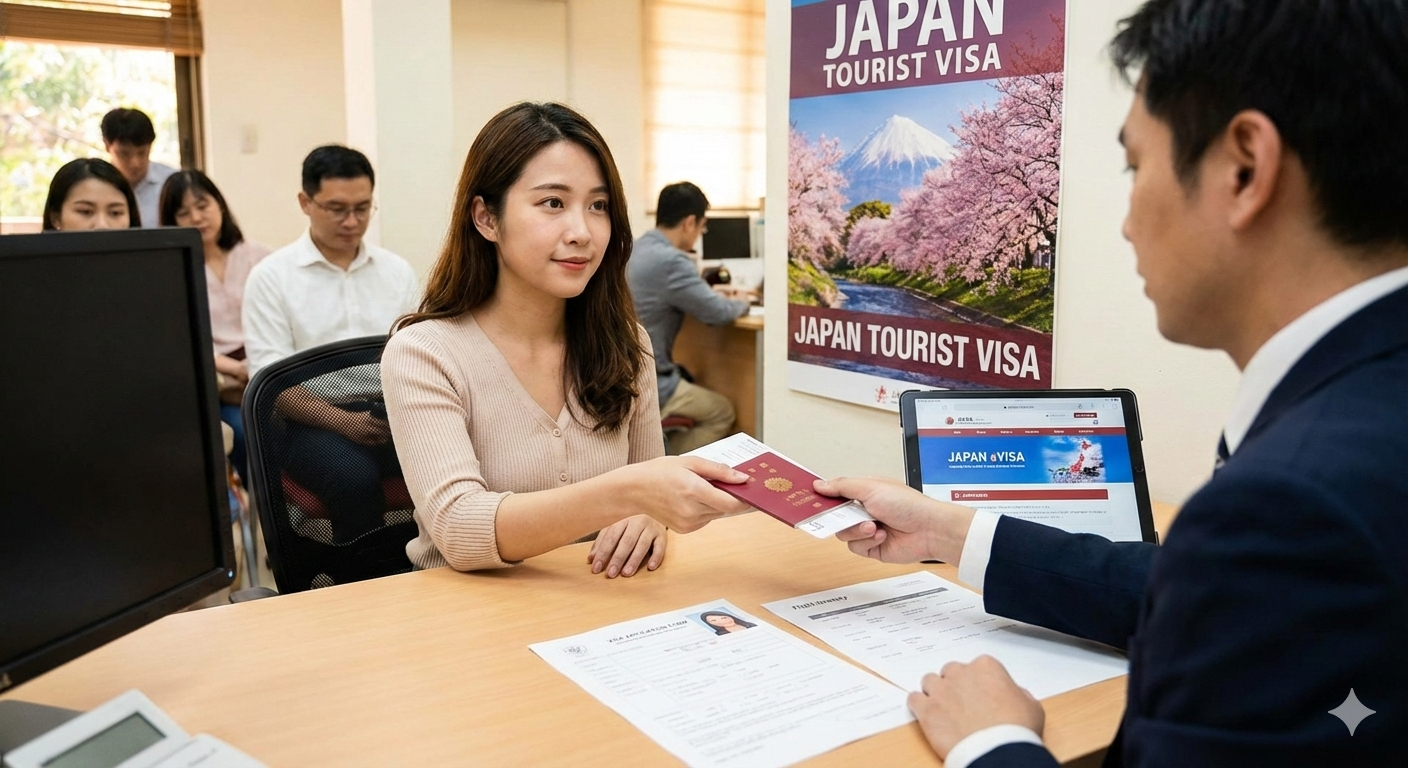
Japan Tourist Visa Complete Guide 2026 – Requirements, Process & Fees
Whether you are planning to witness the cherry blossoms in Kyoto, explore the neon-lit streets of Shinjuku, or find peace in the shrines of Nara, securing your Japan Tourist Visa is the first step of your journey.
As of 2026, Japan has streamlined its application process with the introduction of the JAPAN eVISA system for many nationalities, making the "Land of the Rising Sun" more accessible than ever. This guide provides a comprehensive, step-by-step breakdown of everything you need to know to get your visa approved.
What Is a Japan Tourist Visa?
A Japan Tourist Visa (Temporary Visitor Visa) is an official document issued to foreign nationals who wish to enter Japan for non-remunerative activities.
- Purpose: Sightseeing, recreation, visiting relatives, or attending short-term business meetings/councils.
- Allowed Activities: You can explore the country, shop, and visit friends. You are strictly prohibited from engaging in paid work.
- Validity & Duration: Typically, a single-entry visa is valid for 3 months from the date of issue, allowing a stay of up to 15, 30, or 90 days.
Types of Japan Tourist Visas
Depending on your travel frequency and nationality, you may apply for one of the following:
- Single-Entry Tourist Visa: The most common type, valid for one trip within a 3-month window.
- Multiple-Entry Tourist Visa: Ideal for frequent travelers. These are usually valid for 1, 3, or 5 years, allowing multiple stays of up to 90 days each. Eligibility often requires proof of significant financial stability or a history of travel to Japan/G7 countries.
- Short-Term Visit Visa: Specifically for those visiting friends or distant relatives, requiring an invitation letter from the host in Japan.
Who Is Eligible for a Japan Tourist Visa?
While many countries (like the UK, USA, and many EU nations) enjoy visa-exempt status for short stays, others must apply.
- General Eligibility: You must hold a valid ordinary passport and prove your intent to leave Japan at the end of your stay.
- Financial Requirements: You must demonstrate sufficient funds to cover your travel expenses (flights, accommodation, and daily costs). There is no "fixed" minimum, but a healthy bank balance relative to your length of stay is crucial.
- Travel History: Having previous visas from Japan or G7 countries (USA, UK, Canada, etc.) can significantly strengthen your application, especially for multiple-entry requests.
Japan Tourist Visa Requirements
To ensure a high approval rate, your documentation must be meticulous.
Required Documents
- Valid Passport: Must have at least 2 blank pages and be valid for the duration of your stay.
- Visa Application Form: Duly filled and signed.
- Photograph: One 2x2 inch (or 3.5x4.5cm depending on jurisdiction) color photo with a white background, taken within the last 6 months.
- Travel Itinerary: A day-to-day breakdown of your planned activities and where you will stay ("Schedule of Stay").
- Flight Reservation: A round-trip flight booking (payment is usually not required until approval).
- Proof of Funds: Recent bank statements (last 3–6 months) and a copy of your Income Tax Return (ITR).
Additional Supporting Documents
- Employment Certificate: Stating your position, salary, and approved leave.
- Letter of Guarantee: Required if someone else is sponsoring your trip.
- Cover Letter: (Optional but recommended) A brief letter explaining the purpose of your trip and your ties to your home country.
Step-by-Step Japan Tourist Visa Application Process
1. Document Preparation
Gather all documents listed above. Ensure your "Schedule of Stay" matches your hotel bookings. Consistency is the key to avoiding red flags.
2. Choose Your Application Path
- JAPAN eVISA (Electronic): If you reside in eligible countries (e.g., USA, UK, Canada, Australia, UAE, etc.), you can apply entirely online via the official eVISA portal.
- Embassy/Consulate: Some regions require you to apply directly at the Japanese mission.
- Accredited Agency: In countries like the Philippines or Vietnam, applications must often go through designated travel agencies (e.g., VFS Global).
3. Appointment & Submission
If applying in person, book an appointment. Submit your documents and pay the necessary fees. In 2026, most submissions are "drop-off," and interviews are rare unless further clarification is needed.
Japan Tourist Visa Processing Time
- Standard Processing: Usually 5 to 10 working days.
- eVISA Processing: Can be as fast as 5 days, but it is recommended to apply at least 3 weeks before your flight.
- Peak Season: During Sakura (March/April) or Autumn Colors (November), processing can take up to a month due to high volume.
Japan Tourist Visa Fees
|
Visa Type
|
Standard Fee (Approx. JPY)
|
Note
|
|
Single-Entry
|
3,000 JPY (~$20 USD)
|
Fees may vary by nationality.
|
|
Multiple-Entry
|
6,000 JPY (~$40 USD)
|
Often waived for certain countries.
|
|
Transit
|
700 JPY (~$5 USD)
|
For stays under 15 days.
|
Note: If applying through an agency like VFS Global, expect an additional service fee ranging from $15 to $30 USD.
Common Reasons for Japan Tourist Visa Rejection
- Incomplete Documents: Missing a signature or a blurry photo.
- Weak Financial Proof: A sudden large deposit in your bank account right before applying (looks suspicious).
- Unclear Itinerary: Vague descriptions like "Sightseeing in Tokyo" without specific locations or hotel names.
- Inconsistency: Flight dates not matching the "Schedule of Stay" dates.
Tips to Increase Your Approval Chances
- Write a Strong Cover Letter: Explain why you want to visit Japan and emphasize your "strong ties" to your home country (job, family, property) to prove you will return.
- Be Realistic: Don't plan a 30-day luxury trip if your bank account only shows $1,000.
- Check Photo Specs: Japan is very strict about photo dimensions and quality. Use a professional service.
After Getting Your Japan Tourist Visa
Once your visa is in hand (or you receive your digital eVISA), follow these steps:
- Register on Visit Japan Web: This is mandatory for 2026. Register your immigration and customs information online to generate a QR code, which will save you hours at the airport.
- Check the "Visa Issuance Notice": If you have an eVISA, you must be able to log in and show the digital "Visa Issuance Notice" on your phone at the airport. Screenshots or PDFs are often not accepted.
- Adhere to Stay Limits: Ensure you do not overstay. Japanese immigration is strict, and overstaying by even one day can result in a multi-year ban.
Frequently Asked Questions (FAQ)
Q: Do I need a visa if I am just transiting through Tokyo?
A: If you stay within the international transit area, no. If you need to clear immigration to change airports or stay overnight, you need a Transit Visa.
Q: Can I extend my 90-day tourist visa while in Japan?
A: Generally, no. Extensions are only granted for extreme emergencies or humanitarian reasons.
Q: Is travel insurance mandatory?
A: While not strictly required for the visa application, it is highly recommended as medical costs in Japan are high.