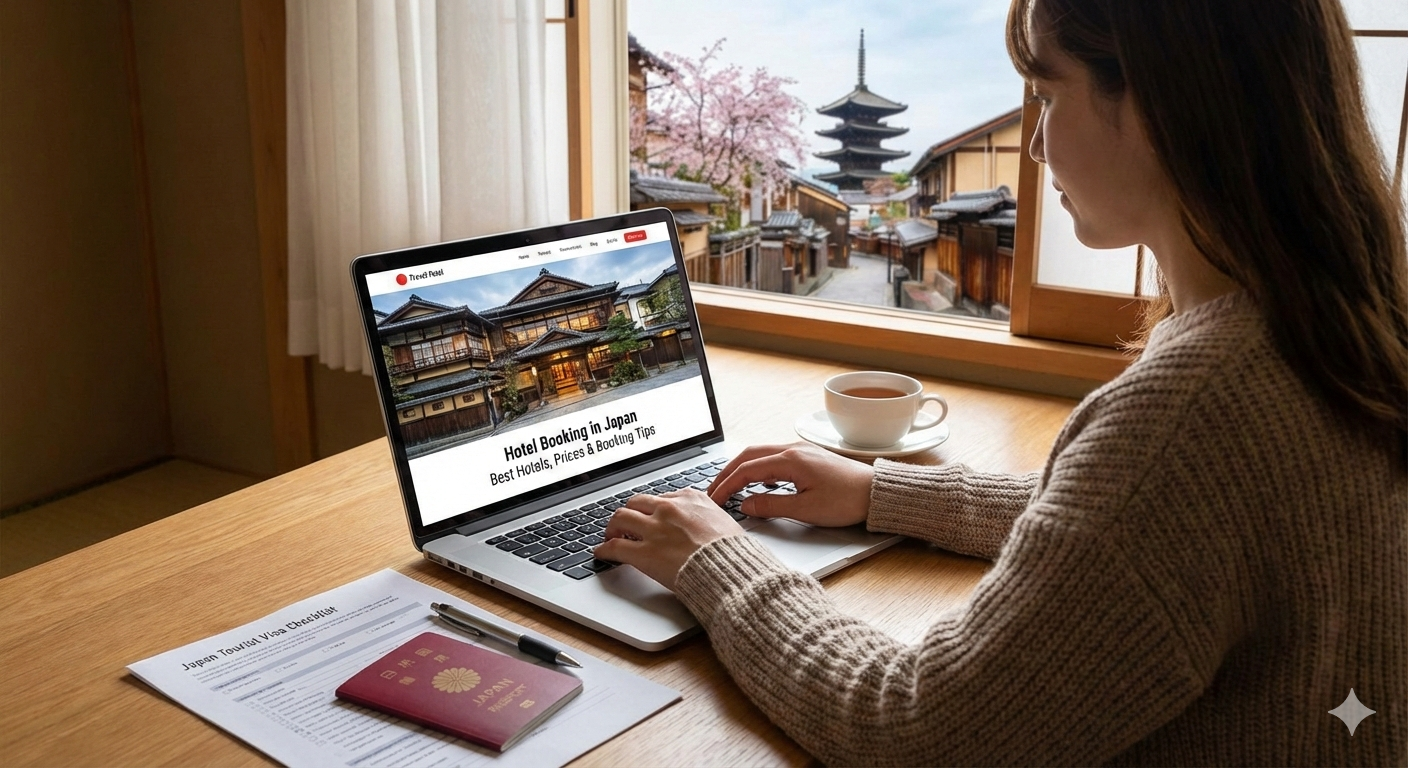
Planning accommodation in Japan is more than choosing a place to sleep it is a mandatory requirement for your Japan tourist visa and a key factor that determines your travel comfort, budget, and overall experience.
Whether you’re visiting Tokyo’s neon skyline, Kyoto’ temples, or Osaka’s food streets, this complete 2026 hotel booking guide explains where to stay, how much hotels cost, which areas are best, and how to book correctly for visa approval.
Booking your hotel early helps you:
In 2026, Japan’s tourism demand remains high, so early reservations are strongly recommended especially during peak seasons.
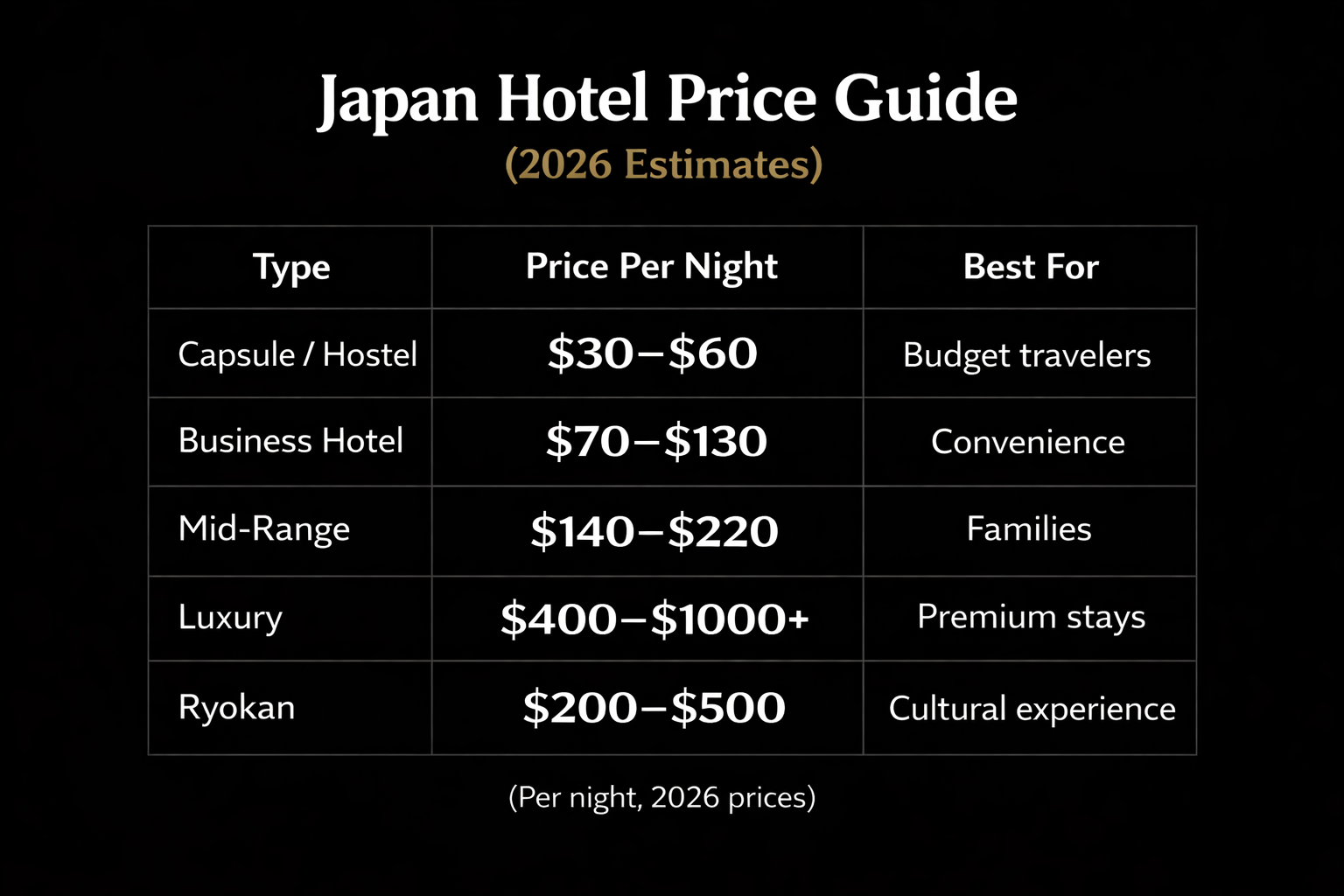
Japan offers accommodation for every budget and travel style:
Compact, affordable, and extremely clean. Ideal for solo travelers or couples. Usually located near major train stations.
Premium stays offering spacious rooms, skyline views, concierge service, and high-end amenities. Best for honeymooners or luxury travelers.
Great for backpackers or budget travelers. Many modern hostels include private capsule-style rooms.
Authentic cultural experience featuring tatami flooring, futon beds, and traditional meals. Ideal for travelers wanting local immersion.
Pod-style sleeping units that are affordable and efficient. Many modern capsule hotels now offer women-only and premium sections.
Perfect for families or long stays. Includes kitchenettes and larger living spaces.
Choosing the right city affects your travel convenience and costs.
Tokyo – Best for first-time travelers major attractions, transport hubs, shopping, and nightlife.
Osaka – Affordable, food-focused city and ideal base for day trips.
Kyoto – Cultural capital with temples, gardens, and heritage sites.
Yokohama – Quiet coastal city near Tokyo.
Nagoya – Central location for exploring the Japanese Alps.
Fukuoka – Best city to explore southern Japan.
Local Tip: Kyoto now applies a tiered accommodation tax. Luxury hotels can add up to ¥10,000 per person per night, usually paid at check-out.
Near Train Stations – Best choice for convenience and time savings.
City Centers – Ideal for shopping and nightlife.
Tourist Districts – Close to attractions and cultural sites.
Business Districts – Quiet and well connected for transport.
Location is often more important than hotel star rating in Japan because transport accessibility saves time and money.
For peak seasons (Cherry Blossom, Golden Week, Autumn foliage), book 3–6 months in advance.
Your hotel confirmation must include:
Printed confirmation is usually required for visa applications.
Most hotels in Japan provide:
Many hotels also feature public baths or spa facilities.
Avoiding these mistakes can save money and travel stress.
Travel agencies often provide advantages such as:
This can be especially useful for first-time visitors.
Q1: Is hotel booking required for a Japan visa?
Yes, confirmed accommodation details are mandatory for tourist visa applications.
Q2: When should I book hotels in Japan?
Book 3–6 months early for peak seasons and 1–2 months for regular travel.
Q3: Are hotels in Japan expensive?
Prices vary widely. Budget stays start around $30, while luxury hotels exceed $400 per night.
Q4: Do Japanese hotels allow early check-in?
Most standard check-in times are around 3 PM. Early check-in depends on availability.
Q5: Is it better to stay near train stations in Japan?
Yes. Staying near stations saves time, transport cost, and walking distance

Welcome to Nakamura Tours
Please login to continue
Welcome to Nakamura Tours